Implications and prospects of integrating social media in English language teaching in higher education
Article Sidebar
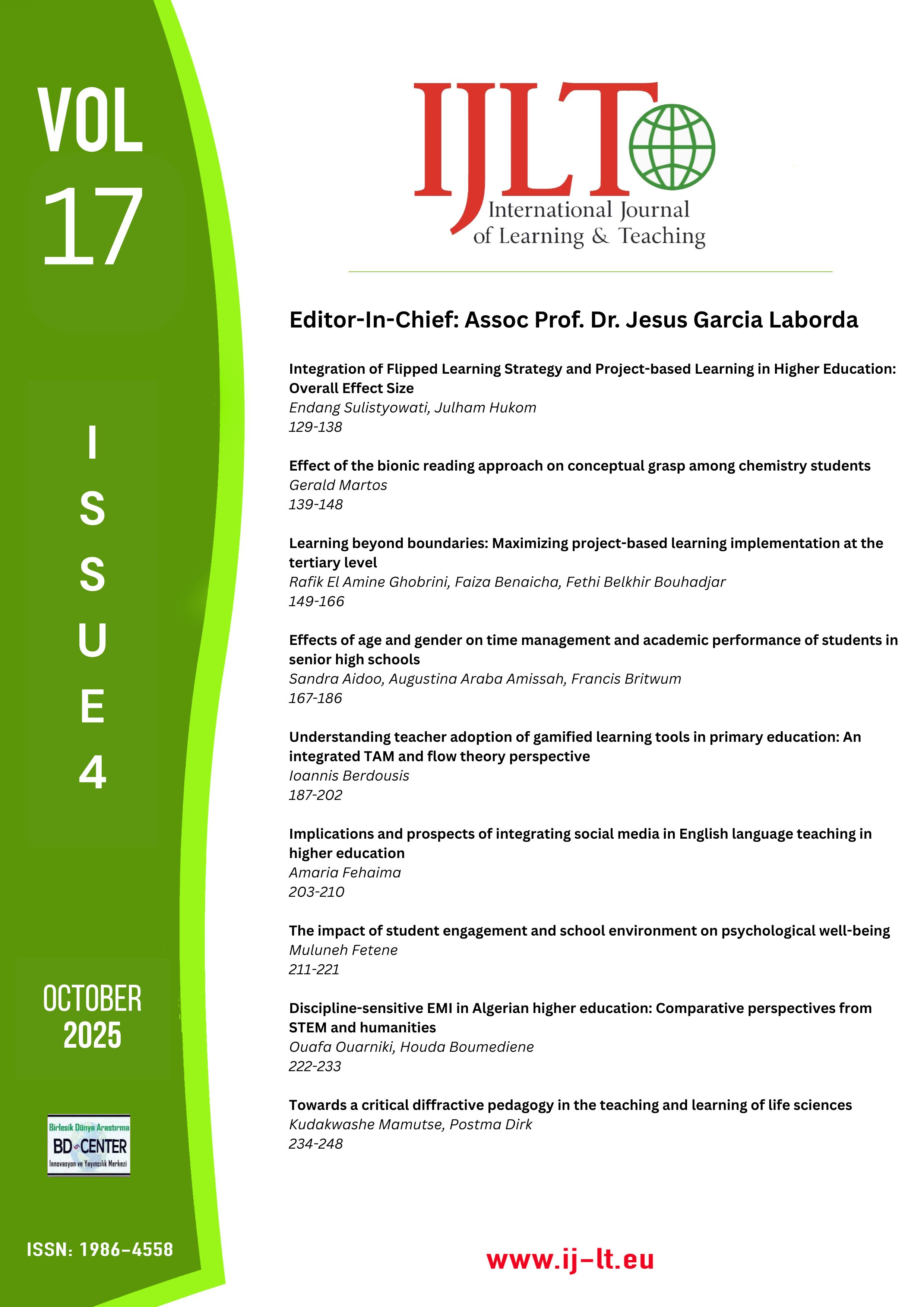
Main Article Content
Abstract
This study investigates the relationship between social media usage and mental health, with particular attention to anxiety and self-esteem among young adults. Despite growing scholarly interest, there remains a gap in understanding how digital interactions influence psychological well-being through complex emotional and social mechanisms. To address this, a mixed methods design was employed, combining a survey of 200 participants who completed standardized measures of anxiety and self-esteem with in-depth qualitative interviews. The analysis revealed that frequent engagement with social media corresponded with elevated anxiety and diminished self-esteem. Further examination indicated that social media activity served as a meaningful predictor of these psychological outcomes. Qualitative insights emphasized the roles of social comparison, validation-seeking behavior, and the supportive potential of online communities. The findings underscore the importance of developing digital literacy programs and implementing platform-level interventions aimed at reducing harmful effects while fostering healthier, more reflective modes of online participation.
Keywords: Anxiety; digital literacy; mental health; self-esteem; social media
Downloads
Article Details

This work is licensed under a Creative Commons Attribution-NonCommercial-NoDerivatives 4.0 International License.
Authors who publish with this journal agree to the following terms:
- Authors retain copyright and grant the journal right of first publication with the work simultaneously licensed under a Creative Commons Attribution License that allows others to share the work with an acknowledgement of the work's authorship and initial publication in this journal.
- Authors are able to enter into separate, additional contractual arrangements for the non-exclusive distribution of the journal's published version of the work (e.g., post it to an institutional repository or publish it in a book), with an acknowledgement of its initial publication in this journal.
- Authors are permitted and encouraged to post their work online (e.g., in institutional repositories or on their website) prior to and during the submission process, as it can lead to productive exchanges, as well as earlier and greater citation of published work (SeeThe Effect of Open Access).