A review of English language learning using augmented reality, virtual reality, and artificial intelligence technologies
Article Sidebar
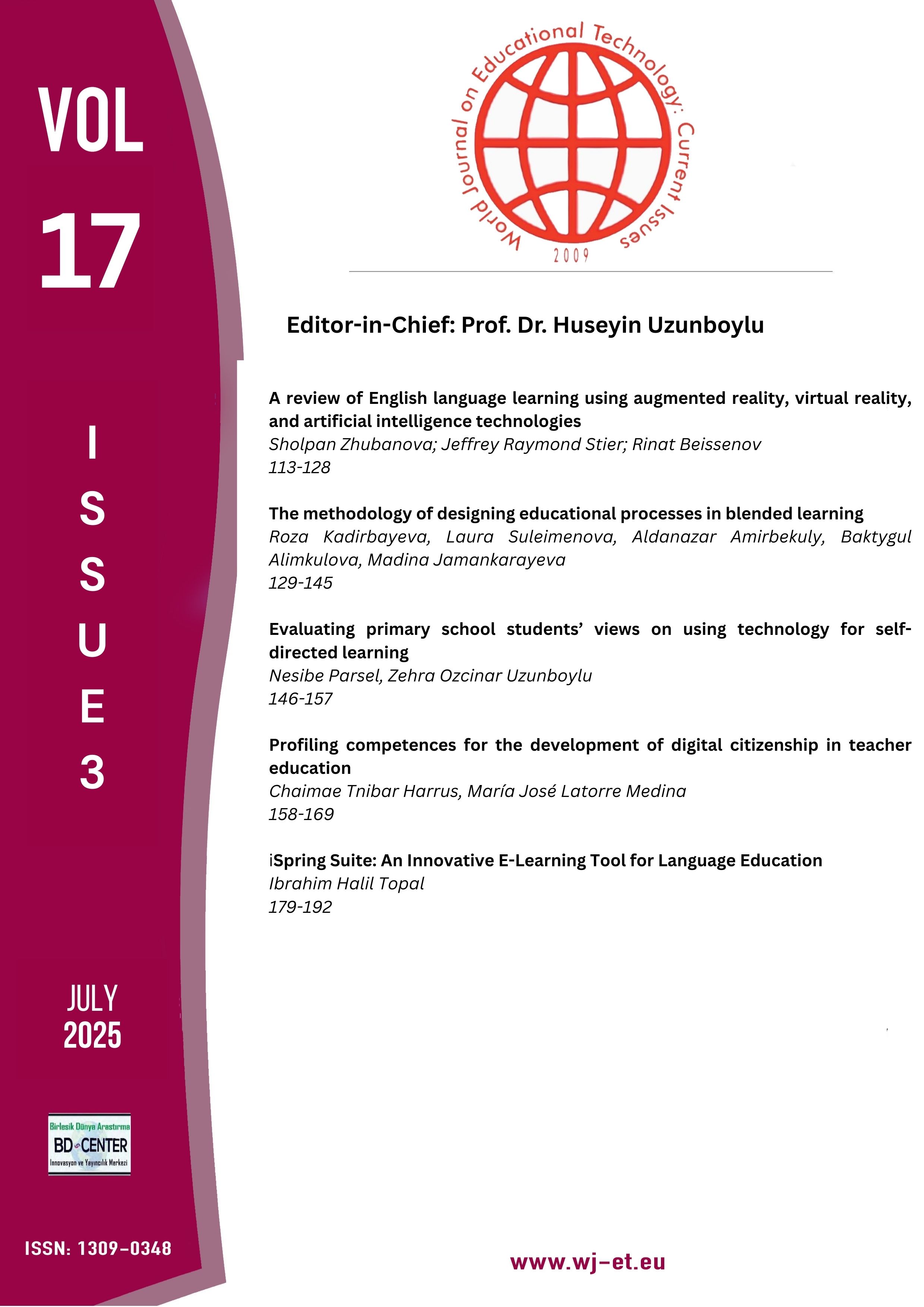
Main Article Content
Abstract
This study investigates the current applications of augmented reality and virtual reality in English language learning, focusing on their potential to enhance language proficiency, cultural understanding, and student motivation. Despite growing interest in immersive technologies, research on their integration in language education remains limited, particularly regarding empirical evidence of effectiveness. The study aims to examine how augmented reality and virtual reality techniques can enrich instructional practices and bridge the gap between classroom learning and real-world experiences. The methodology involved surveys, interviews, and experimental analysis with 103 participants randomly assigned to an experimental group, which received AR and VR-enhanced instruction, and a control group, which followed traditional methods. The experimental intervention included virtual language simulations, interactive exercises, and immersive learning environments. Findings indicate that AR and VR applications positively influence student engagement, learning outcomes, and adaptability to diverse learning styles. The study underscores the significance of integrating immersive technologies in language education and highlights the need for continued research and development to optimize instructional design and educational impact.
Keywords: Augmented reality; education; immersive learning; language learning; virtual reality.
Downloads
Article Details

This work is licensed under a Creative Commons Attribution 4.0 International License.
World Journal on Educational Technology: Current Issues is an Open Access Journal. The copyright holder is the author/s. Licensee Birlesik Dunya Yenilik Arastirma ve Yayincilik Merkezi, North Nicosia, Cyprus. All articles can be downloaded free of charge. Articles published in the Journal are Open-Access articles distributed under CC-BY license [Attribution 4.0 International (CC BY 4.0)].
Birlesik Dunya Yenilik Arastirma ve Yayincilik Merkezi (BD-Center)is a gold open-access publisher. At the point of publication, all articles from our portfolio of journals are immediately and permanently accessible online free of charge. BD-Center articles are published under the CC-BY license [Attribution 4.0 International (CC BY 4.0)], which permits unrestricted use, distribution, and reproduction in any medium, provided the original authors and the source are credited.